QuitGPT presents itself as a political and ethical boycott rather than a tech review or a generic anti AI rant. The organizers argue that OpenAI has crossed a line by aligning too closely with US power structures, especially the Trump administration and national security agencies. They highlight two core accusations: first, that OpenAI executives have become major donors to Trump-linked political groups, and second, that the company accepted a Pentagon framework allowing its models to be used for “any lawful purpose,” which critics read as including autonomous weapons, mass surveillance, and immigration enforcement. In their view, this turns ChatGPT into an infrastructure layer for authoritarian tools rather than a neutral productivity app.
Beyond politics, the campaign taps into mounting unease about AI’s psychological and social side effects. Media coverage and researchers have described “AI psychosis,” where heavy chatbot use appears to correlate with breaks from reality or worsening manic symptoms, and they cite estimates that a significant fraction of weekly ChatGPT users show warning signs. At the same time, parasocial attachment to AI “partners” and “friends” is no longer a fringe topic but the focus of large online communities, which makes sudden product changes or model removals emotionally disruptive for some users. To many critics, ads in chat interfaces, aggressive growth tactics, and opaque training practices look like a continuation of attention capitalism, just with a more intimate, conversational face.
The r/nosurf thread adds a cultural layer: users complain that Reddit is flooded with “AI speak,” formulaic essay-like posts whose tone and structure resemble ChatGPT outputs, whether or not a bot actually wrote them. This feeds into “dead internet” worries that human conversation is being drowned out or reshaped by machine-generated text. Put together, all of this gives the #QuitChatGPT and #QuitGPT slogans traction: they resonate with people tired of perceived political bias, corporate capture, and the feeling that even casual online discussion is being subtly steered by AI tools.
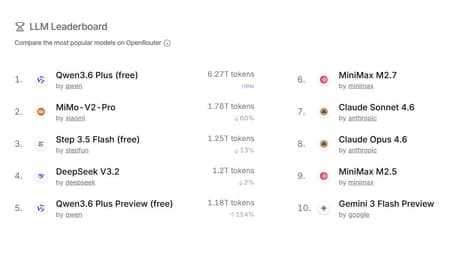
Meanwhile, alternatives are not just theoretical. The QuitGPT site explicitly lists privacy-focused services and mainstream competitors like Google Gemini and Anthropic Claude, and in early 2026 Claude briefly overtook ChatGPT at the top of the iOS App Store, helped by a public dispute over government access and a big marketing push. That shift, even if partly symbolic, reinforces the idea that users can vote with their feet rather than simply accept the default chatbot everyone else uses.