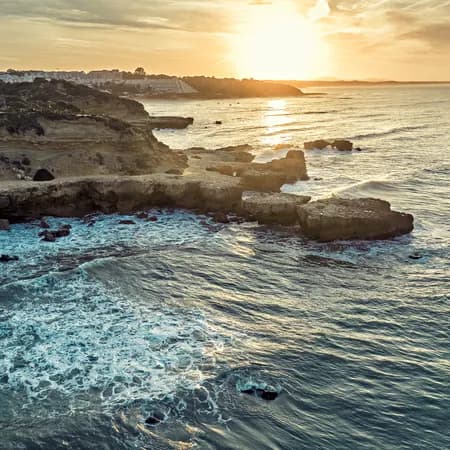
The Chapel of Senhor da Pedra, built in 1686, rises dramatically on a rocky outcrop overlooking the Atlantic Ocean in Miramar, Portugal. This seaside sanctuary seems almost to float between land and sea, accessible by a stretch of sand that disappears beneath the tide. The site had long been considered sacred even before the chapel’s construction - ancient pagan and possibly Celtic worshippers are believed to have held rituals there, venerating natural forces and the elements. Its Christian builders, rather than erase this legacy, integrated it into the design, creating a space where faith and folklore intertwine.
The chapel’s compact hexagonal structure, topped with a simple yet elegant dome, houses an ornate interior featuring three richly decorated rococo altars, gilded woodcarvings, and vivid religious imagery. Inside, the contrast between the modest external form and the opulent decoration evokes a sense of humble devotion elevated by artistic beauty.
Over the centuries, the Chapel of Senhor da Pedra has become a symbol of endurance against nature’s power - battered by winds and waves, yet still standing. Local legends give it an aura of mystery: one tale tells of fishermen rescued from a storm by following a radiant stone that led them safely to shore, where the chapel now stands. Today, it continues to draw pilgrims, travelers, and photographers, especially at sunset, when the merging of light, water, and stone seems to revive the ancient harmony between earth, sea, and spirit.