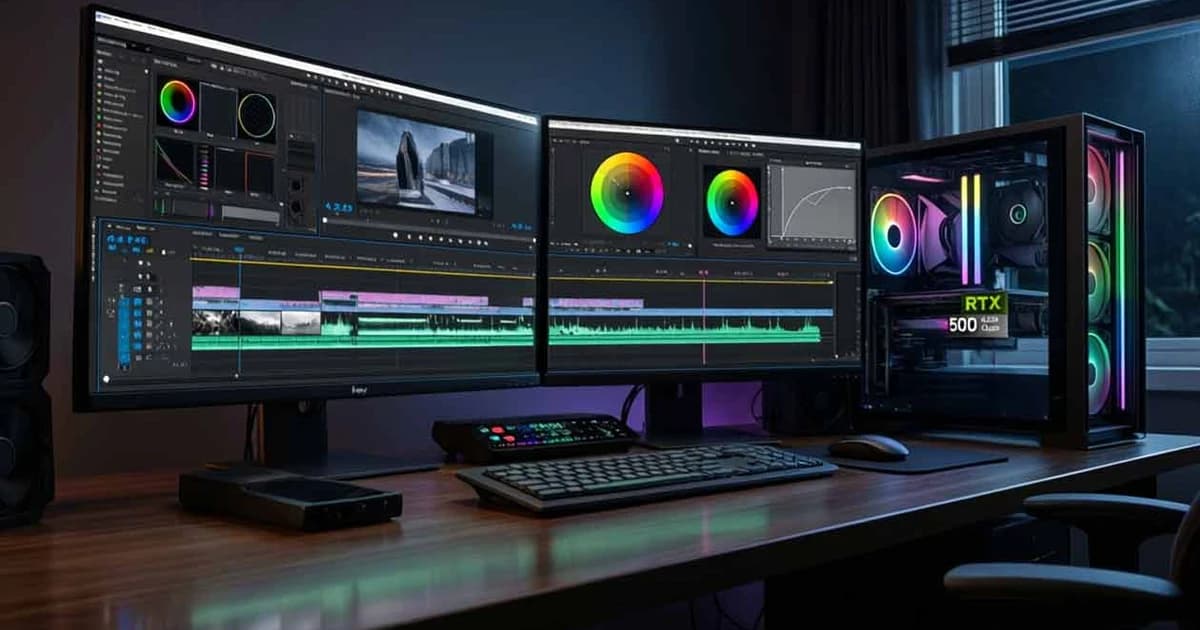
The new RTX 5000 and GeForce RTX 50 series cards push video work into much more “pro” territory by adding native 4:2:2 10‑bit support, stronger AI acceleration, MV‑HEVC for 3D and VR, and an extra AV1 Ultra High Quality mode aimed at final exports. In practice this means smoother editing of heavy H.265/HEVC and AV1 footage, far faster exports, and cleaner color work, especially in tools like DaVinci Resolve Studio 20 and similar NLEs. Earlier Intel iGPUs did offer hardware decode for some formats, but they typically struggled with multi‑stream 4:2:2 workflows compared with what the latest NVIDIA encoders and decoders are doing now.
For DaVinci Resolve, RTX 50‑series GPUs can accelerate generative and assistive AI features up to around 2x compared with the previous generation, which stacks on top of the big jump users already saw going from pure CPU or older GPUs to RTX hardware. On the encoding side, the ninth‑generation NVENC block delivers about a 5% quality gain in HEVC and AV1 at the same bitrate, with AV1 Ultra High Quality adding roughly another 5% by using a deeper lookahead, more B‑frames and a stricter GOP structure to squeeze out more detail. In some apps, switching from software 4:2:2 to GPU‑accelerated 4:2:2 can mean up to an 11x speedup, and the new decoder can handle up to eight 4K60 4:2:2 streams at once, which is a big deal for multicam timelines.
MV‑HEVC support is mainly interesting if you are working with immersive 3D or VR video, since it can encode multiple views of the same scene more efficiently by reusing redundancy between them, which in turn lowers bitrates for headset delivery without throwing away too much quality. Overall, these changes are less about headline marketing claims and more about finally aligning “gaming”‑class hardware with long‑standing pro codec needs, especially for editors grading 10‑bit footage, using AI effects heavily and exporting to modern formats like AV1 for streaming or client delivery.