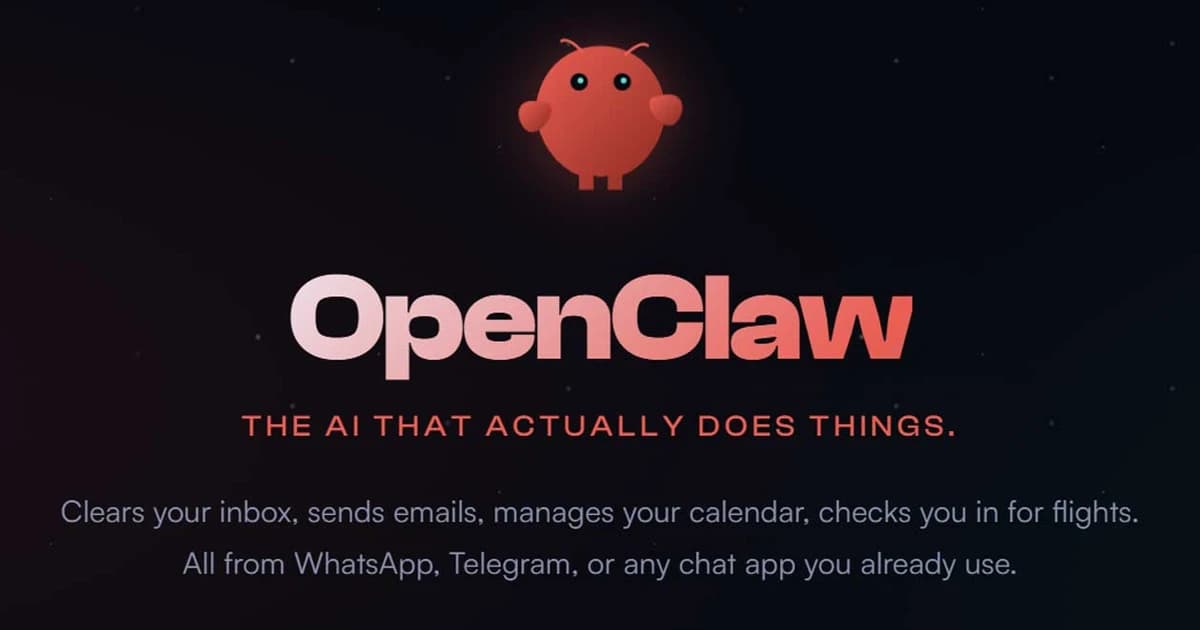
OpenClaw is an open source personal AI assistant that runs on your own machine and connects to chat apps like WhatsApp, Telegram, Discord, Slack or iMessage, so you interact with it like a coworker in DMs rather than through a web dashboard. Instead of just answering questions, it can control your browser, read and write files, run shell commands and orchestrate other tools, which lets it automate things like email triage, reporting, code maintenance or basic ops tasks in the background. It keeps persistent memory about you and your workflows, gradually building a customized “second brain” that remembers preferences, accounts and ongoing projects. People use it to watch inboxes, manage calendars, control smart devices and even spin up custom skills that OpenClaw can often help write itself.
What makes it feel unusual is the combination of autonomy and local control: you can self‑host, wire in any mix of cloud and local models, and let it proactively act on your behalf, which is why some users describe it as an early glimpse of everyday AGI‑style agents. At the same time, security researchers warn that giving an agent broad filesystem, browser and API access on a connected machine is a serious attack surface if misconfigured or compromised, especially in corporate networks. The UX is also still quite technical, often relying on Docker and CLI tooling with no traditional GUI, so it clearly targets tinkerers more than casual users.
Despite those caveats, the project has exploded in popularity in early 2026, with an active community shipping skills, sharing setups and treating it as a kind of “personal OS” for automated work. Whether it will stay reliable at scale and safe for non‑experts is still an open question, but it is already a compelling test case of what agentic AI can do outside big vendor silos.