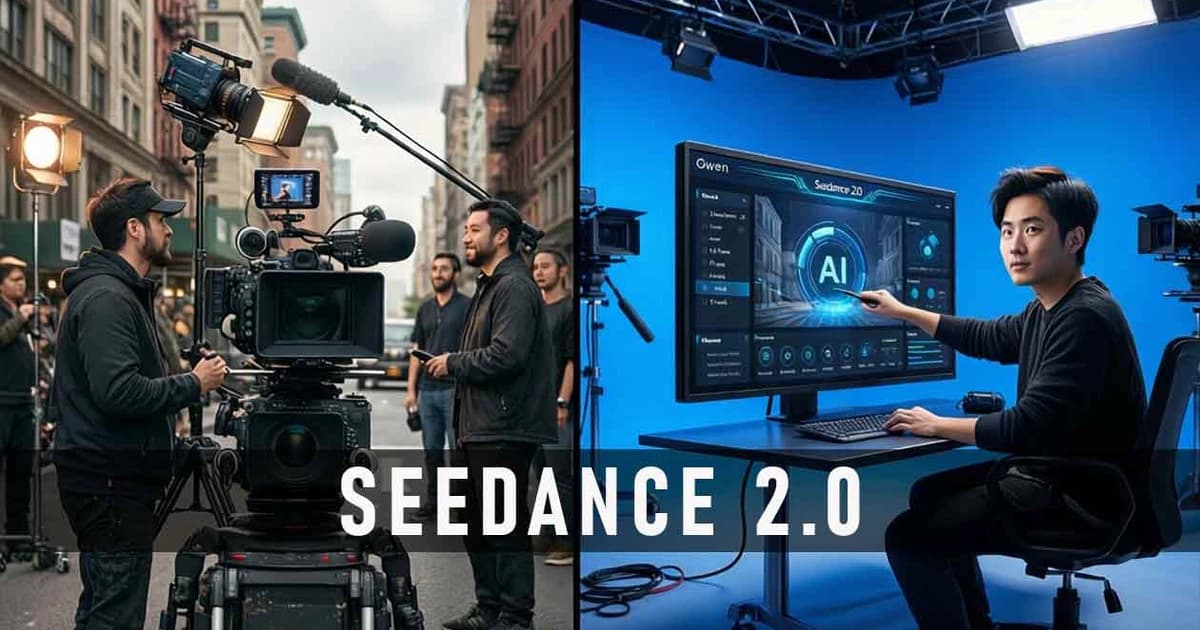
Seedance 2.0 is ByteDance’s latest text to video system and has quickly become a showcase of how far Chinese AI video tools have come in just a couple of years. The model can take a prompt plus up to 12 inputs text, several images, multiple audio tracks and even other videos and then generate continuous scenes that look like short movie clips rather than experimental AI tests. Test users highlight smooth camera moves, believable facial expressions, lip sync and strong character consistency across shots, which are all areas where earlier systems struggled with glitches, warped bodies or constant identity drift. Crucially, Seedance 2.0 also outputs layered audio including dialogue, ambient sound and effects, so the result drops into a professional editing timeline almost like raw footage from a real shoot.
What makes the model so spectacular for many creatives is this end to end package controllable cinematography, flexible inputs, stable characters and ready to cut sound which lets small teams prototype ads, trailers or even longer narrative pieces that used to demand full crews and large budgets. However the same realism is driving ethical concern. Hollywood studios accuse ByteDance of enabling mass copyright violations after waves of viral clips showed staged fights and scenes with clearly recognizable stars generated without licenses, and Chinese reports mention a suspended feature that could imitate a person’s voice from a single image. These disputes point to deeper questions about consent, performer rights and how much training data and output reuse is acceptable when AI can mimic not just style but full likeness and performance.
In terms of competition, Seedance 2.0 is part of a broader push in China that also includes Alibaba’s RynnBrain for robotics and Kuaishou’s Kling 3.0 for video, models that aim to rival tools from OpenAI, Google and Nvidia. Analysts now describe Chinese systems as only months behind the top Western offerings, and in some respects such as multimodal control and integrated sound Seedance looks ahead of the pack. Whether it becomes a staple in global film and advertising or mainly fuels a flood of ultra cheap AI content will depend on how regulators, rights holders and platforms choose to respond.