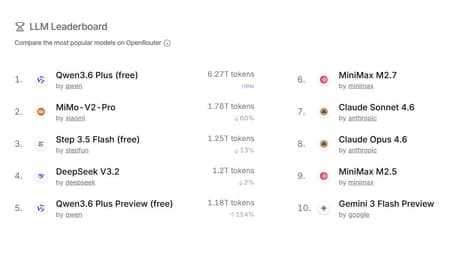
China’s open source AI scene is no longer just a local story, it is starting to reshape how big US platforms build their products. Pinterest has been experimenting with the DeepSeek R‑1 model since early 2025, using it to sharpen recommendations and turn the site into something closer to an AI shopping assistant, instead of relying purely on American labs. Airbnb’s CEO says the company “relies a lot” on Alibaba’s Qwen models for its AI‑driven customer service agent, mainly because they are very capable, fast to integrate and significantly cheaper than some closed US options. Behind these deals sits a broader trend described in a Stanford DigiChina report, which finds that Chinese open‑weight models are now central in the global AI race, supported by generous government backing, open licensing and a huge ecosystem of derivative models.
These systems are not always the absolute most powerful, but they are “good enough” for many real tasks and can be run on modest hardware, which makes them attractive far beyond China’s borders.
At the same time, the openness that makes them flexible also complicates safety and governance, because local deployments are harder to track and regulate, and Western policymakers now have to think seriously about how to cooperate with Chinese labs while still managing security and geopolitical risks.