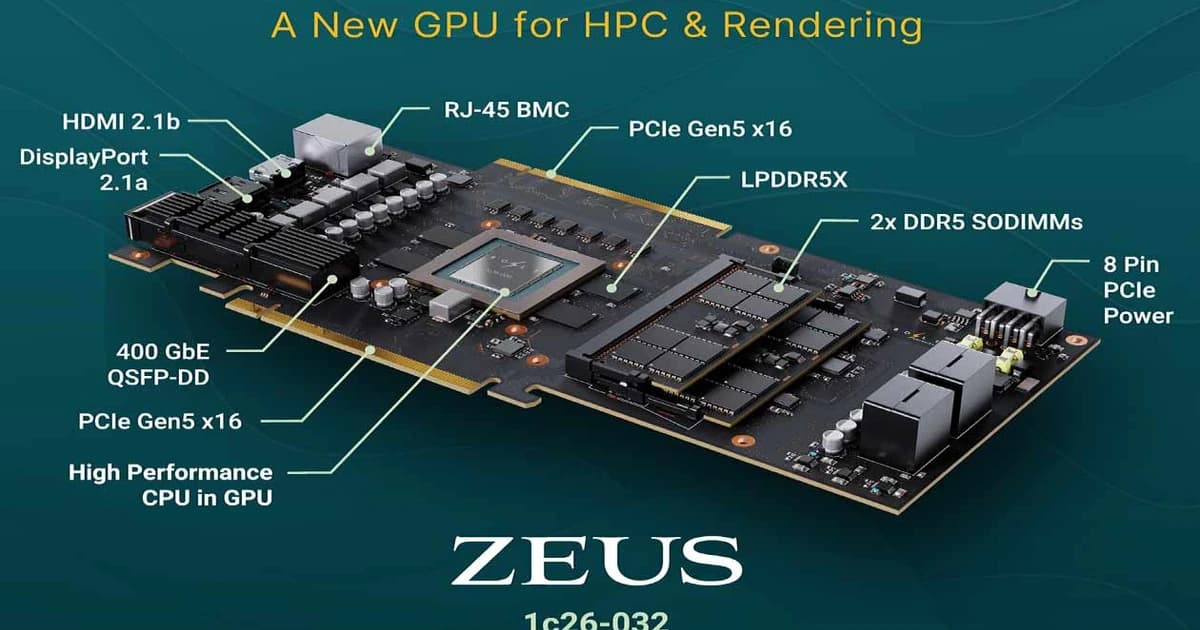
Bolt Graphics, a small player in the GPU space, just announced their Zeus GPU has reached tape-out at TSMC on a 12nm FFC process. This means design is done, and production prep is underway for a Q4 2027 debut. They're making bold claims: Zeus could deliver up to 5x the path tracing performance of the RTX 5090 at just 250W TDP, compared to the 5090's 575W, and up to 6x faster in HPC tasks.
No real-world benchmarks exist yet, since it's pre-production and years out. All we have are the company's specs and simulations, so take the numbers with a grain of salt. For context, pro cards like NVIDIA's RTX Pro 6000 have shown about 13% better scores than the 5090 in tests like 3DMark Time Spy Extreme, but that's not a direct gaming rival.
Zeus focuses on efficiency for data centers and rendering, with expandable VRAM up to 1TB in server configs, native 400/800GbE networking, and variants from PCIe cards (20 TFLOPs FP16, 32GB LPDDR5X at 120W) to 2U servers hitting 1228 gigarays in ray tracing. They promise 17x lower total compute costs by cutting power, space, and infra needs.
The GPU market in 2026 is tricky, with rumors of NVIDIA skipping big consumer refreshes like RTX 50 Super due to memory shortages for AI priorities, and possible cuts to gaming GPU production. AMD's rumored RX 9080 might challenge high-end too, but again, no solid tests. Bolt's entry could shake things up if it delivers, especially for HPC over pure gaming, but skeptics note past overhyped startups often fall short without drivers or ecosystem support.
Overall, it's an intriguing underdog story. Possible? Sure, niche architectures can excel in specific workloads like path tracing. But until samples ship and independent benchmarks drop, it's mostly hype versus NVIDIA's proven dominance.